

Our work speaks for itself.Waterloo Tower, commissioned as a one-of-a-kind public landmark for the University of Texas West Campus, marks the inaugural and tallest structure within the district’s newly established zoning district. The project extends the artist’s ongoing exploration of how discrete, modular components can be manipulated to produce complex, emergent forms.
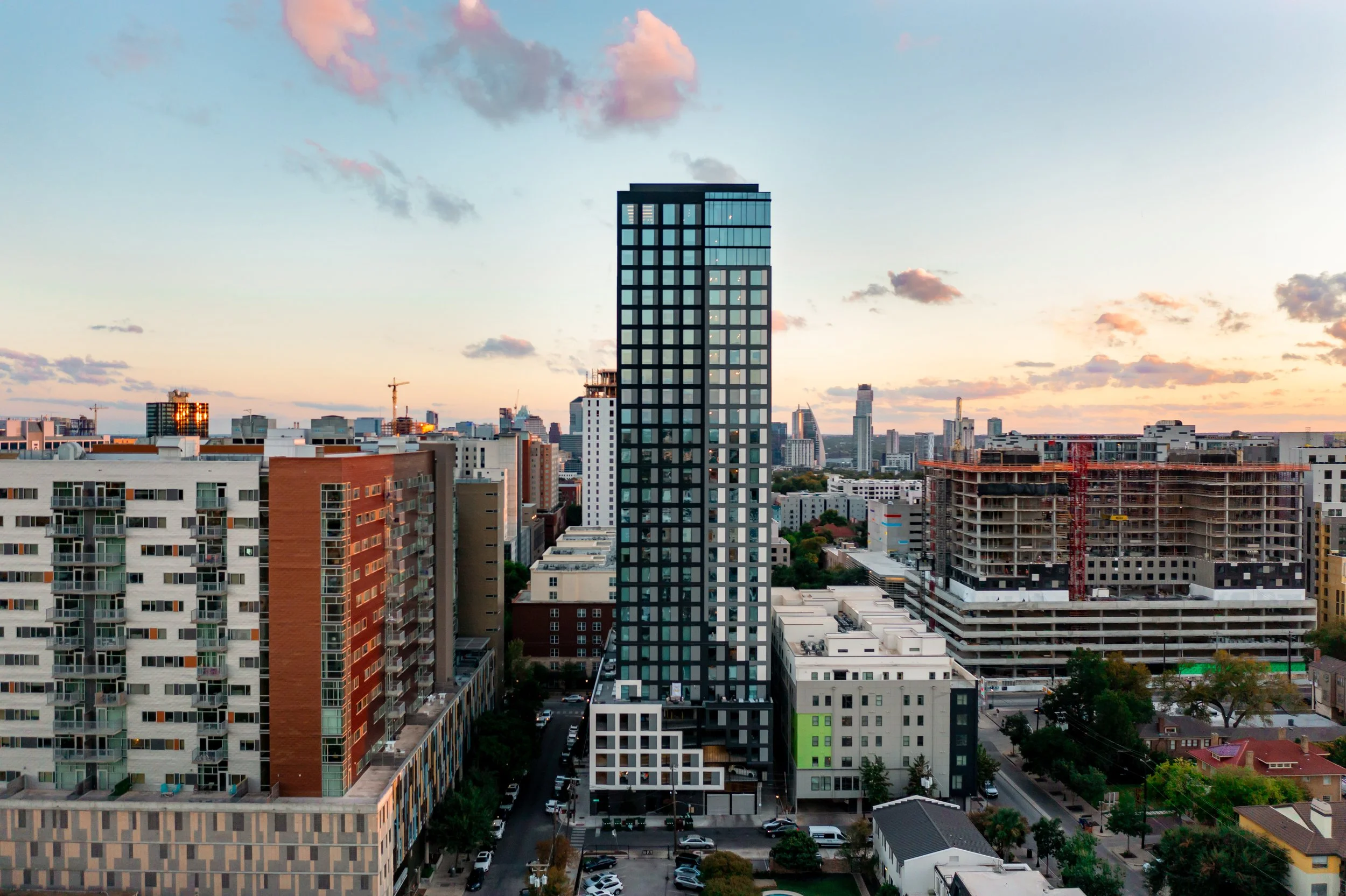
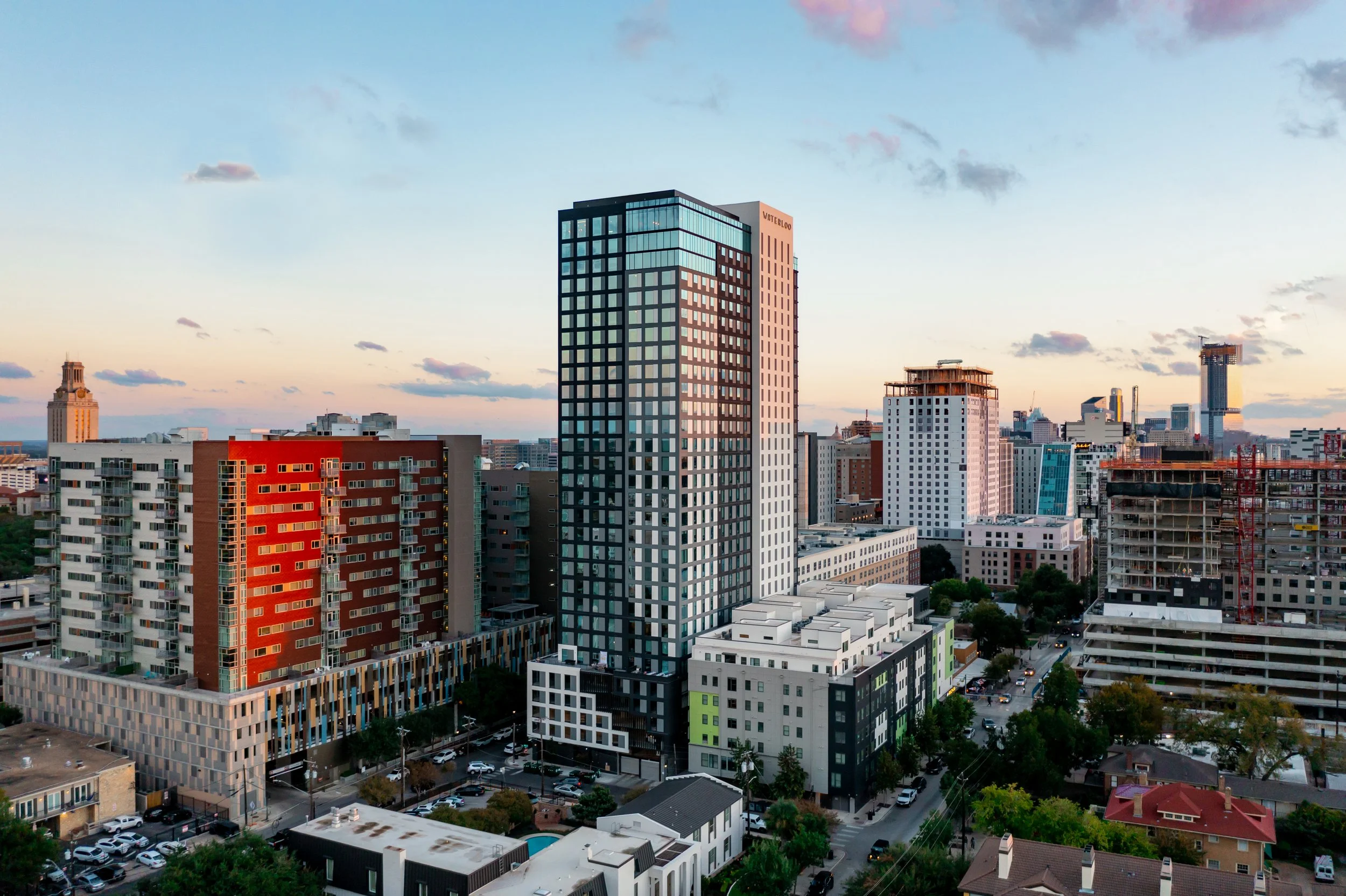
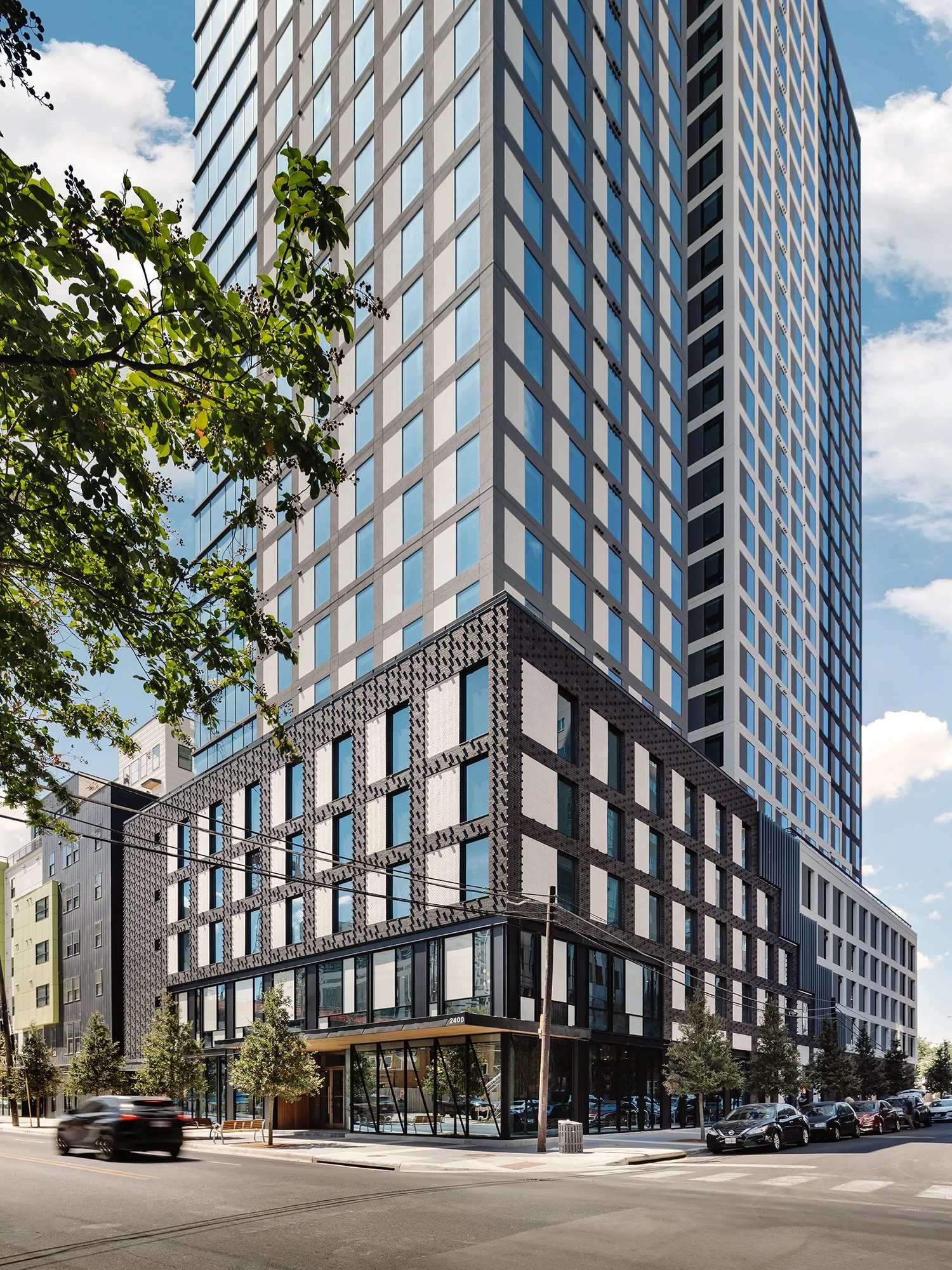
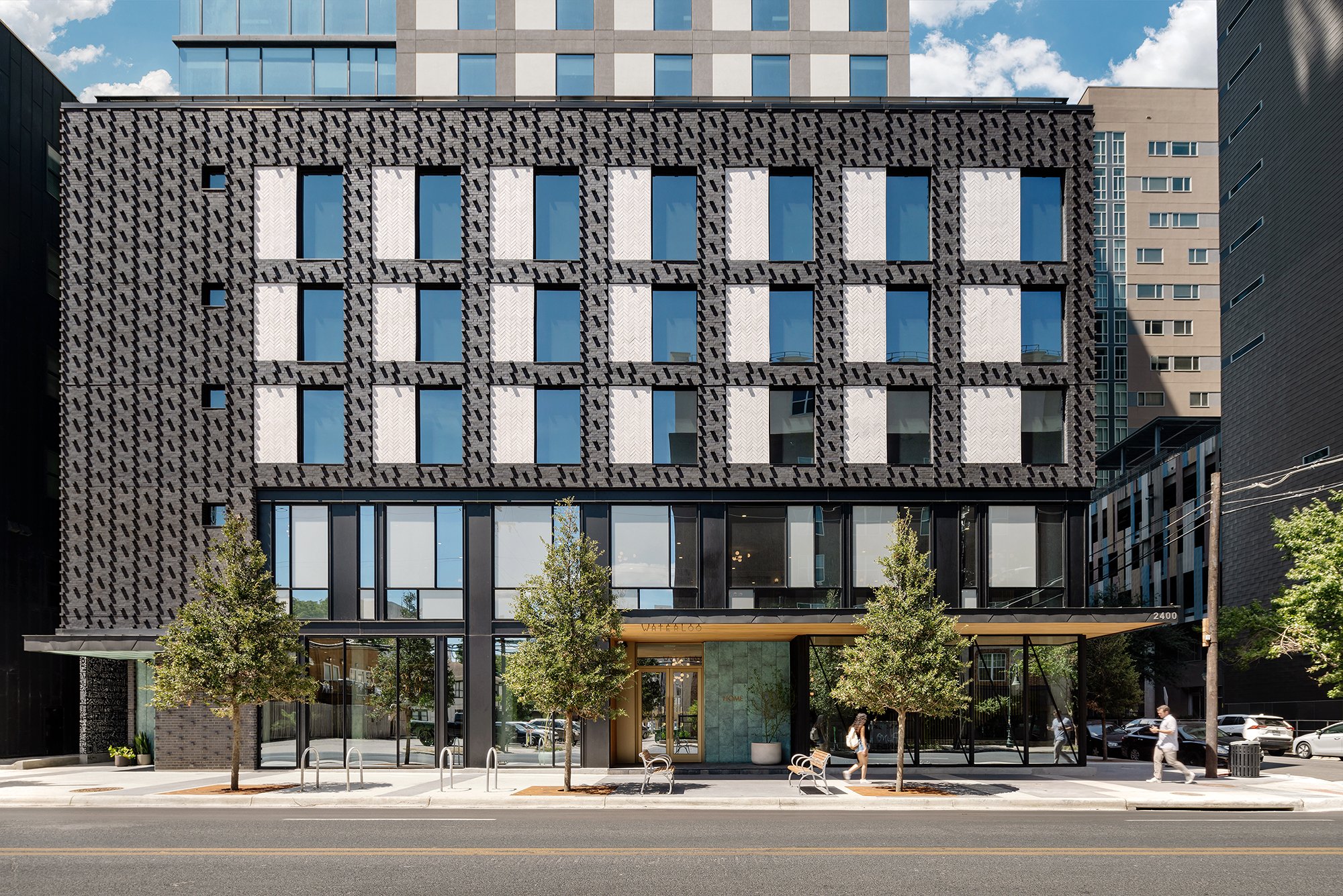
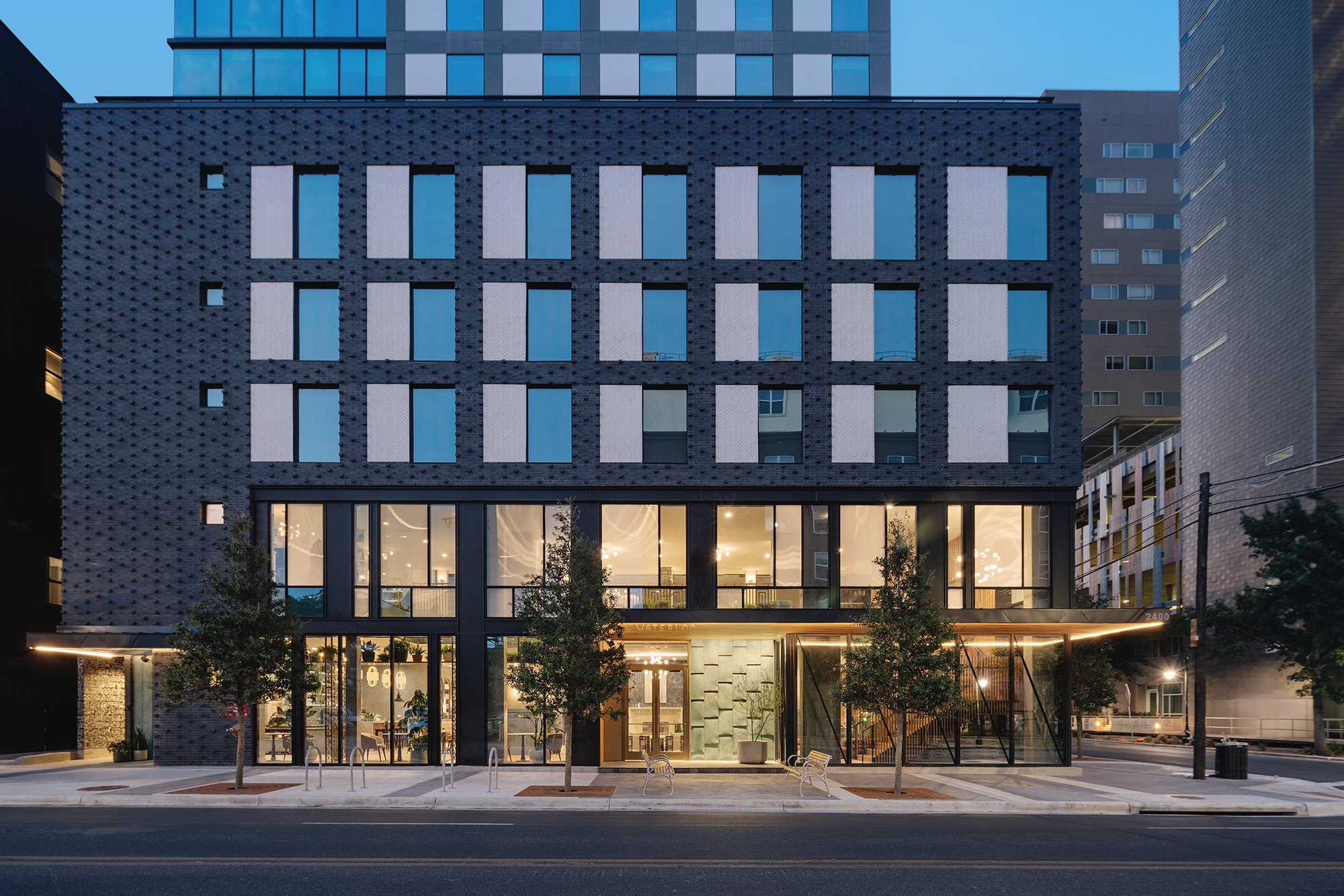
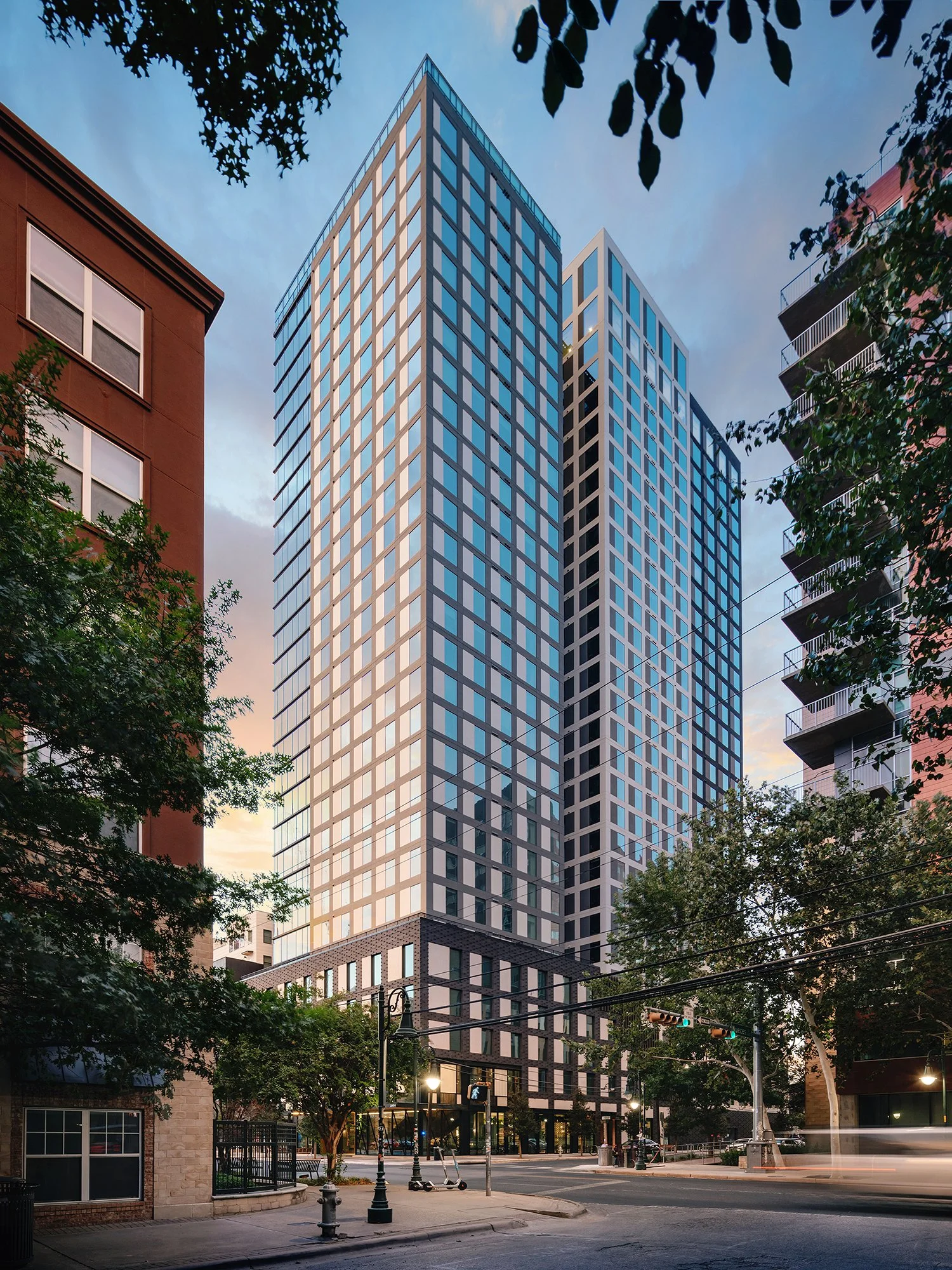
At its core, the tower maintains a simple rectilinear volume. Yet through a carefully orchestrated surface tactics—defined by an undulating rhythm of windows and patterned façades—the structure resists its own geometry. The composition generates a perceptual effect of torsion, as if the building itself is twisting upward toward the sky. This illusion is further amplified by the progressive widening of the glass apertures as they ascend, subtly shifting scale and proportion over the height of the tower.
Integral to the project is the development of a custom algorithm that mediates between artistic intent and material constraint. By incorporating manufacturer parameters, such as minimum and maximum glass dimensions, the system calibrates each unit while maintaining a strict glazing ratio of 25 percent. This synthesis of computational precision and formal ambition enabled the realization of a highly distinctive architectural expression within practical and economic limits.
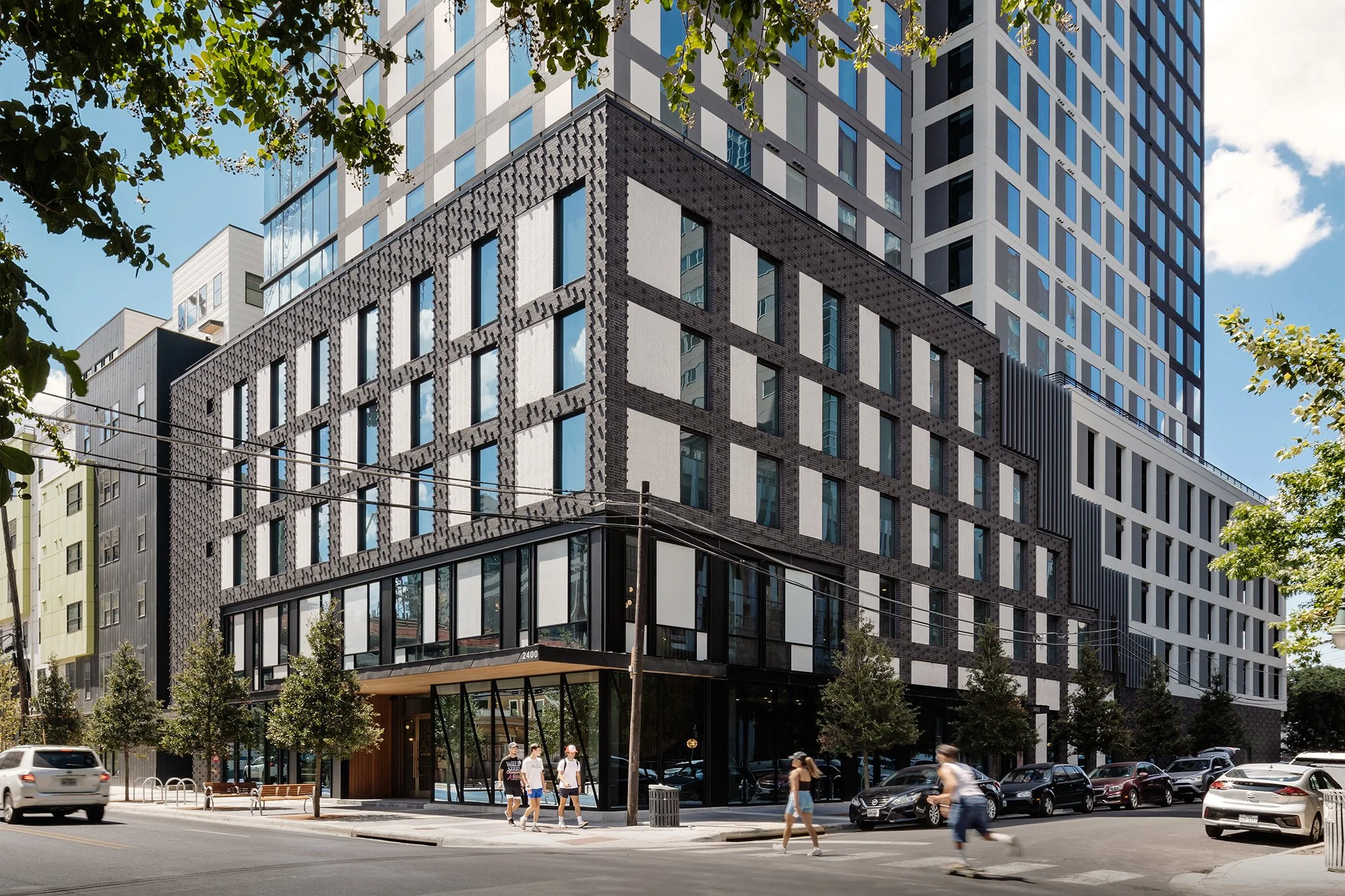
At the ground level, the use of brick introduces a tactile counterpoint to the tower’s glass envelope. Chosen for its modularity and hand-laid construction process, brick becomes both medium and message. Through repetition and subtle variation, the material is recontextualized—transforming the familiar into something unexpected. In this way, the project foregrounds the act of making, blurring the boundaries between art and architecture, and inviting viewers to reconsider the expressive potential of everyday materials.